

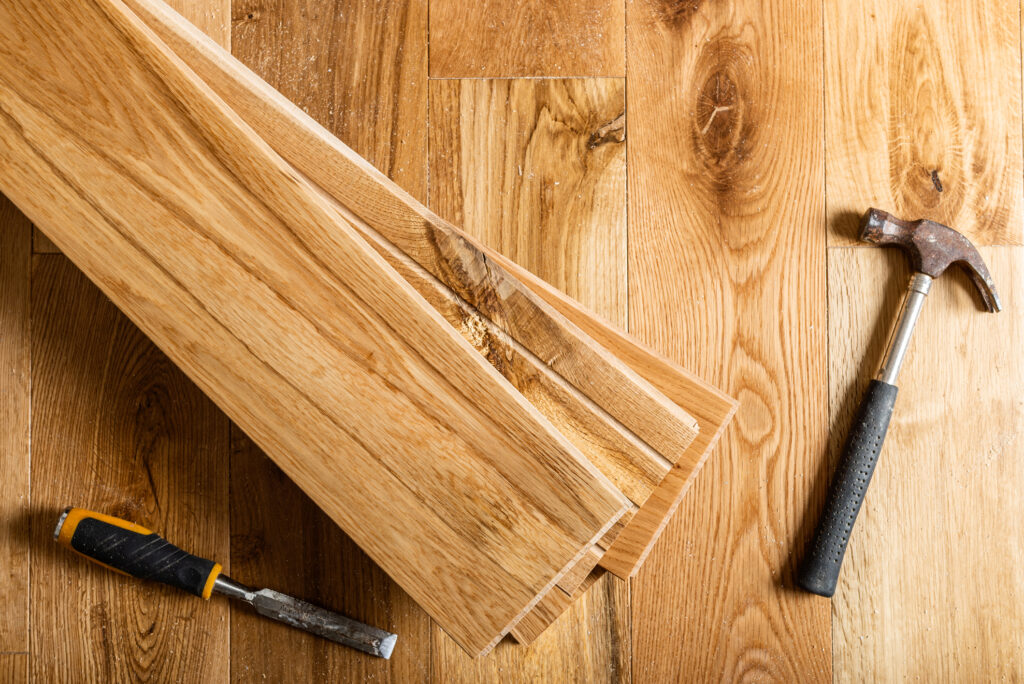
Whether you just wrapped up a home renovation or had a few extra boxes delivered “just in case,” it’s common to be left with extra wood flooring. While tossing it in the trash may seem like the easiest solution, it’s definitely not the most sustainable—or cost-effective—one. If you’re wondering what to do with leftover wood flooring, there are plenty of smart and eco-friendly ways to give those boards a second life.
1. Save It for Future Repairs
The most practical option is to keep a few planks on hand for future fixes. Flooring can get scratched, dented, or warped over time. Having matching boards from the original batch makes it easier to replace a section without worrying about color or grain differences. Be sure to store the wood in a dry area, away from moisture or extreme temperature swings.
2. Use It for DIY Projects
Wood flooring is incredibly versatile, even outside of the floor. Leftover planks can be used in all kinds of DIY home improvement or décor projects. Here are a few ideas:
- Create a custom headboard using planks in a horizontal or herringbone layout.
- Build floating shelves or wall-mounted organizers.
- Use shorter cuts to make a coffee table top or a rustic serving tray.
- Add an accent wall using tongue-and-groove boards for easy installation.
These projects not only add character to your space but also help reduce waste.
3. Donate or Sell It
If you have more leftover wood than you need—or if the type of wood doesn’t match your current home—you might consider donating it. Local non-profits, thrift stores, or building material reuse centers (like Habitat for Humanity ReStores) often accept flooring in good condition. You can also try selling it online through resale platforms or neighborhood marketplaces.
4. Use It as Craft Material
Smaller scraps or slightly damaged boards can still be used for crafts and art projects. Many woodworkers and hobbyists are happy to take spare wood for creative builds. Think picture frames, birdhouses, planter boxes, or coat racks. Even kids’ school projects could benefit from some real wood!
5. Recycle It Responsibly
If your leftover wood flooring is too damaged or warped to reuse or donate, the next best step is recycling. However, wood flooring is often not accepted in curbside recycling bins. These materials can contain adhesives or finishes that require specialized handling.
That’s where a professional transfer station comes in handy. At Tri-State Disposal, our Calumet City transfer station accepts construction and demolition debris, including wood flooring. We ensure it’s sorted and processed responsibly so that as little material as possible ends up in landfills.
Why Responsible Disposal Matters
Improper disposal of leftover flooring can contribute to unnecessary waste, especially since wood is a valuable and recyclable resource. By taking the time to reuse, donate, or drop off your leftover wood flooring at a licensed facility, you’re doing your part to support a cleaner, greener community.
Need to Get Rid of Leftover Wood Flooring?
Skip the mess and bring your excess materials to Tri-State Disposal’s transfer station in Riverdale, IL. Our team makes it easy to dispose of wood and other construction debris responsibly. Visit us today or contact us for details about accepted materials, pricing, and hours.